Choosing between PNG and SVG seems simple until you need your files to work everywhere. A logo has to look sharp on a website, in a slide deck, inside a PDF, on a social graphic, and sometimes even on printed material. Icons need to stay crisp at tiny sizes. Screenshots need to preserve exact pixels. Marketing graphics need to balance quality, speed, and compatibility.
The PNG vs SVG question comes up often for students, creators, freelancers, developers, office teams, and small businesses. Both formats are useful, but they solve different problems. If you pick the wrong one, you might end up with blurry logos, oversized downloads, broken transparency, or files that are harder to edit and share.
The short version is this: SVG is usually better for logos, icons, and simple illustrations because it scales cleanly without losing quality. PNG is usually better for screenshots, detailed raster graphics, and anything that depends on exact pixel data. The smarter workflow is not choosing one format forever. It is knowing when to use each, when to convert image files, and how to store the right version for each job.
Quick answer: when PNG or SVG makes more sense
- Use SVG for logos when you need clean scaling, editable shapes, and small file sizes for simple designs.
- Use SVG for icons when they are flat, geometric, or line based.
- Use PNG for screenshots because screenshots are pixel based by nature.
- Use PNG for complex graphics when they include textures, soft shadows, photo effects, or detailed raster editing.
- Use PNG for transparent exports when the app, platform, or recipient does not support SVG well.
- Keep both formats if you want the editable master plus a widely compatible backup.
There is no single best image format for every task. The right choice depends on whether your file is vector based or pixel based, where it will be used, and how much control you need over quality and compatibility.
What PNG and SVG actually are
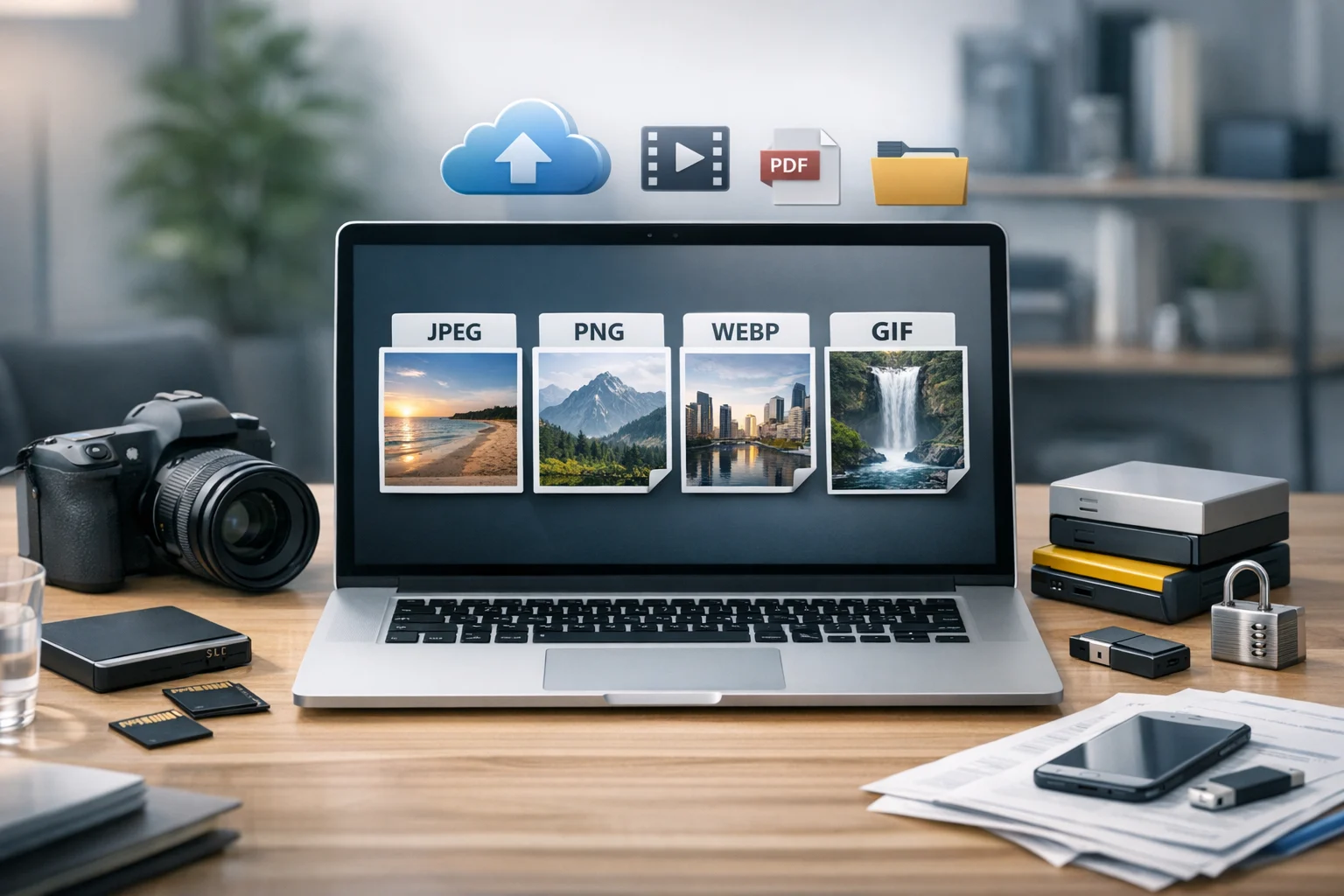
PNG is a raster image format
PNG stores images as pixels. Every pixel has color information, and PNG can also preserve transparency. That makes it a great option for screenshots, UI captures, diagrams exported from apps, and graphics that need a transparent background.
Because PNG is pixel based, it does not scale infinitely. If you enlarge a small PNG logo too much, it will start to look soft or jagged. That is the main reason PNG is not ideal as a master logo format.
SVG is a vector image format
SVG stores shapes, lines, paths, and text as mathematical instructions instead of fixed pixels. That means an SVG logo or icon can scale up or down without losing sharpness. In many cases, SVG files are also smaller than PNG files for simple artwork.
SVG works best when the graphic is made from clean shapes, not photographic detail. It is excellent for brand marks, icons, charts, line art, and interface elements. It is less useful for screenshots or heavily textured images.
PNG vs SVG for logos
If you are deciding on one format for a logo master file, SVG usually wins.
Logos need flexibility. A single logo might appear in a website header, on a mobile screen, inside an email signature, in a proposal, on packaging, and as a tiny favicon. SVG handles that flexibility well because the shapes stay sharp at any size.
SVG is especially strong for:
- Wordmarks and text based logos
- Flat brand symbols
- Badges, seals, and outlined artwork
- Dark mode and light mode versions
- Responsive web use
PNG is still useful for logos, just not usually as the only version. A transparent PNG works well when you need a quick drag and drop asset for documents, social posts, presentations, or software that does not handle SVG properly. Many office tools, client portals, and older workflows still expect PNG.
A practical setup is to keep:
- SVG as the master web and scale friendly version
- PNG as the compatibility version with transparency
- JPG only when you need a flat background and smaller file size than PNG
If someone sends you a logo in the wrong format, ConvertAndStore makes it easy to use image converter tools for quick format changes while keeping your files organized.
PNG vs SVG for icons
For most icons, SVG is the better choice. App icons, menu icons, feature symbols, and UI graphics are often based on simple lines and shapes. That is exactly what vector formats are built for.
SVG icons offer a few major advantages:
- They stay crisp on standard and high resolution screens
- They can be resized without exporting multiple versions
- They are often lighter than PNG for simple artwork
- Developers can sometimes style them with code
PNG icons are still useful in a few cases. If an icon includes textured shading, complex effects, or pixel specific detail, PNG may be more reliable. PNG can also be helpful when you need fixed size exports for app stores, slide decks, or platforms with strict upload requirements.
For web and product design, many teams keep SVG as the source and export PNG versions only when needed. That avoids repeated redesign work later.
PNG vs SVG for screenshots
Screenshots should usually stay PNG.
A screenshot is already a pixel image captured from a display. Turning it into SVG does not make it scalable in a meaningful way. In most cases, it just creates a less practical file or requires tracing, which changes the image rather than preserving it.
PNG is a strong screenshot format because it keeps sharp edges, interface text, and transparency better than many alternatives. That is one reason PNG often comes up in the classic JPG vs PNG comparison. JPG can produce smaller files, but it may introduce visible blur around text and UI details. For screenshots, that tradeoff is often not worth it.
You might still convert a screenshot from PNG to another format for a specific need. For example:
- Convert PNG to JPG when you need a smaller file for email or uploads
- Convert PNG to WebP for lighter website images
- Convert screenshots into a PDF for sharing reports or walkthroughs
If you need a faster, smaller version of a screenshot for general sharing, try the PNG to JPG converter. Just remember that JPG is better for photos than for detailed interface captures.
PNG vs SVG for graphics and illustrations
For simple illustrations, infographics, diagrams, maps, and shape based artwork, SVG is usually the stronger option. It keeps lines sharp, scales perfectly, and often stays compact.
For complex digital art, exported design comps, layered effects, textured illustrations, or graphics with shadows and blending, PNG is often safer. Those details are raster by nature, and trying to force them into SVG can make files more complicated instead of more efficient.
A good way to think about it is this:
- SVG describes shapes
- PNG preserves pixels
If the graphic is mostly shapes, SVG fits. If the graphic depends on exact pixels, PNG fits.
This also helps when comparing WebP vs PNG. WebP can be excellent for smaller web delivery, but PNG may still be the better editing or archive version for transparent graphics and screenshots. Many teams store a master PNG, then create a web friendly WebP copy for publishing. If that is part of your workflow, the JPG to WebP converter can help with lighter website assets when your starting point is JPG.
File size, quality, and performance
People often assume SVG is always smaller. That is not always true.
For a simple logo made of a few shapes and colors, SVG can be tiny and extremely efficient. For a very detailed illustration with thousands of paths, filters, masks, and embedded data, an SVG can become bulky. In that case, a PNG export may actually be easier to handle.
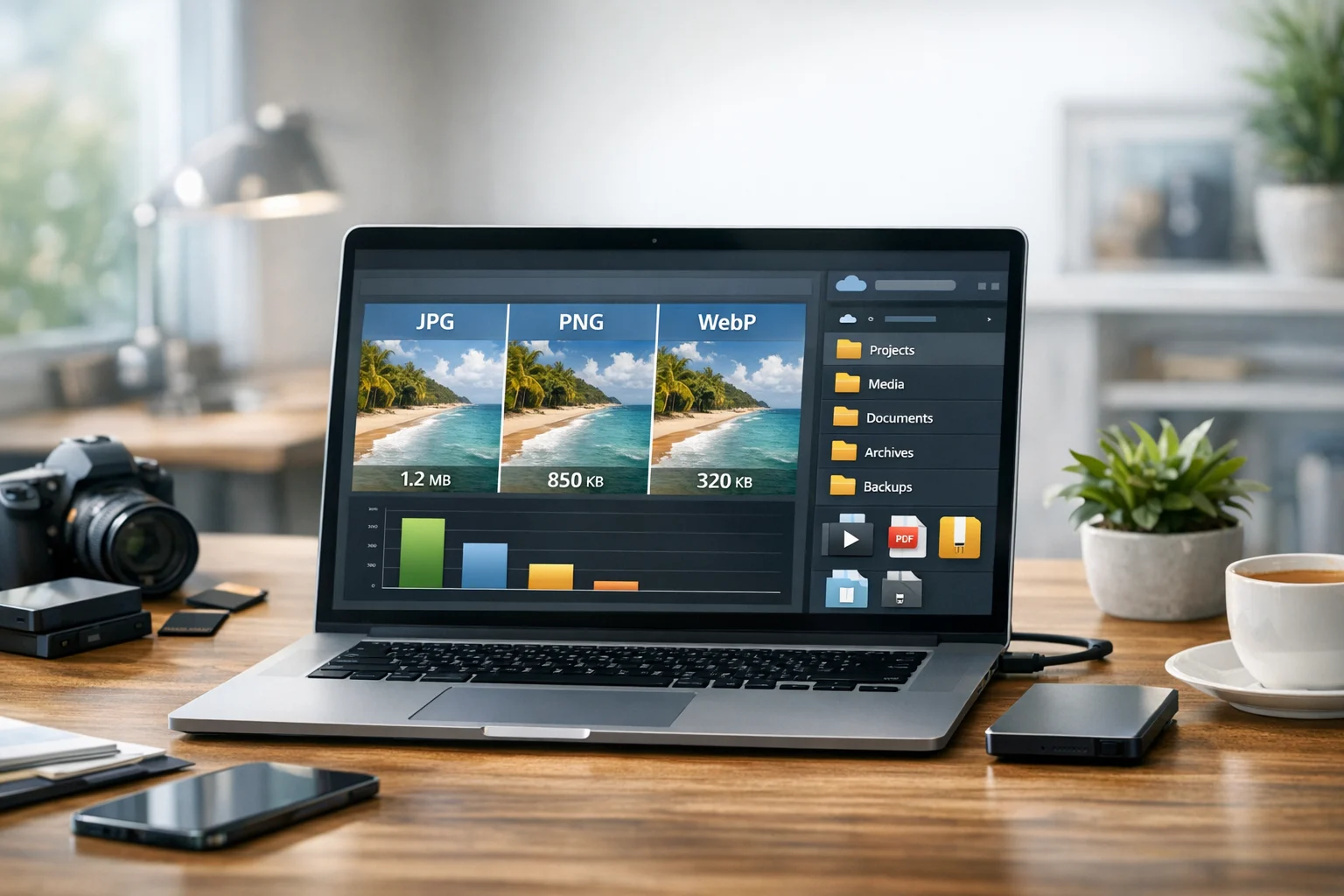
PNG file sizes also vary a lot depending on the image content. A flat graphic with transparency may stay fairly compact. A large screenshot or detailed composition can get heavy fast. That is where file compression matters.
Compression and conversion are related, but they are not the same thing. Sometimes you need to reduce file size without changing the format. Other times you need a different format for compatibility or web performance. If you want a clear breakdown of that decision, this guide on image compression vs image conversion is worth reading.
As a rule:
- Use SVG when quality at any size matters and the design is shape based
- Use PNG when exact visual appearance matters and the file is pixel based
- Use WebP or JPG for lighter web delivery when transparency or editing flexibility is less important
Compatibility, editing, and conversion limits
The biggest mistake people make is assuming conversion can always recreate the ideal source format.
You can convert an SVG logo into PNG easily. That is common and useful. You are basically exporting a pixel version of a vector file.
Going the other direction is different. Converting a PNG into SVG only works well when the image is simple enough to trace cleanly, such as a flat icon or a black and white mark. A detailed screenshot, textured graphic, or anti aliased logo will not turn into a clean vector master just because you changed the file extension or ran a quick conversion.
This matters for client handoffs and team workflows. If you only have a tiny PNG logo, enlarging it for print or high resolution layouts may be a problem. If possible, ask for the original vector source early.
It also helps to think beyond images. Many users who convert image files also need to convert PDF files for previews, reports, or uploads. A PDF converter is useful when you need PDF to JPG snapshots for presentations or image to PDF exports for sharing design mockups and screenshots in one file. The same practical mindset applies across formats: choose the file type that fits the next task, not just the current one.
How PNG and SVG fit into a bigger file workflow
Most people are not managing one logo in isolation. They are handling screenshots, product images, social graphics, PDFs, archives, and sometimes even video clips for campaigns or documentation. That is why file decisions are really workflow decisions.
A small business might store:
- SVG brand assets for logos and icons
- PNG screenshots for support documentation
- JPG or WebP website images for speed
- PDF brand guides, proposals, and presentations
- MP4 and MOV video files for product demos and social content
In that environment, using one trusted file converter matters. You may need an image converter for graphics, a PDF converter for document exports, and a video converter when you need to convert video files for wider playback. Even the common MP4 vs MOV question comes down to compatibility, file size, and where the media will be used.
There is also the archive side of file handling. When you share a logo pack or project handoff, putting assets into a ZIP archive keeps everything together. If someone sends older materials in a RAR archive, it helps to standardize those files before long term storage. Archive cleanup, file compression, and naming conventions can save a lot of time later.
Storing logos, screenshots, and graphics the smart way
Once you have the right formats, the next challenge is keeping them organized. File chaos builds fast when you have logo-v2-final, logo-final-new, logo-final-use-this, and five screenshot exports in different folders.
A better structure looks like this:
- Master: original SVG logo files and source graphics
- Exports: PNG, JPG, WebP, and platform specific sizes
- Documents: brand guides, image to PDF exports, approvals
- Screenshots: dated folders for support, QA, or project notes
- Archive: older versions packaged in ZIP files when needed
This is where cloud storage becomes part of the format conversation. If you keep only scattered local copies, it is easy to lose the clean SVG master and get stuck using an old PNG. Reliable cloud storage gives you one place to keep current assets, share links, and manage versions.
For teams and freelancers, it also helps to think about cost and security. Cheap cloud storage is useful, but price alone should not decide where your brand files live. Encrypted cloud storage and secure file storage matter when you are keeping client materials, unpublished campaigns, product screenshots, contracts, or internal design docs. Good file backup habits matter too, especially when a logo or marketing pack is needed again months later. The same storage system can support document storage for PDFs and image exports without creating duplicate copies everywhere.
If your team is trying to keep creative assets under control, this guide to best practices for file conversion, backup, and storage can help you build a cleaner system.
Common mistakes to avoid
- Using JPG for logos with transparency. You lose the transparent background and may introduce compression artifacts.
- Using PNG as the only logo master. It limits scaling and editing later.
- Trying to vectorize every PNG. Not every raster graphic should become SVG.
- Uploading oversized PNGs to the web. Resize, compress, or convert when needed.
- Keeping assets in random downloads folders. Organized storage saves time and reduces mistakes.
- Ignoring compatibility. A perfect SVG is not helpful if the recipient only accepts PNG or PDF.
A practical choice guide
Choose SVG if you need:
- A logo that scales from favicon to billboard
- Sharp icons for websites and apps
- Editable vector artwork
- Simple illustrations with clean lines
Choose PNG if you need:
- Screenshots with crisp interface details
- Transparent graphics for broad compatibility
- Raster exports from design apps
- Complex visuals with textures or effects
Choose an additional export such as JPG or WebP if you need:
- Smaller files for web pages
- Faster sharing by email or messaging
- Lighter uploads where perfect transparency is not essential
Frequently Asked Questions
SVG is usually better for logos because it scales without losing quality and stays editable. PNG is still useful as a backup or compatibility version, especially when you need transparency in apps that do not support SVG well.
Screenshots are pixel based images, so PNG preserves them accurately. SVG is a vector format and is not a natural match for screenshots unless you are tracing or recreating the content as shapes.
You can, but results depend on the image. Simple flat logos may trace well into SVG. Detailed, blurry, or textured PNG files usually do not convert into clean vector artwork and may need manual redesign.
No. SVG is often smaller for simple logos and icons, but complex vector artwork can become large. PNG may be more practical for detailed raster graphics, screenshots, or effects heavy designs.
Use PNG when you need transparency, crisp text, or clear screenshot details. JPG is better for photos and lighter sharing when small file size matters more than perfect edge quality.
Keep the original SVG or design source, plus exported PNG or JPG versions, in organized cloud storage with backup. For sensitive business or client assets, use secure file storage or encrypted cloud storage so files stay protected and easy to find.