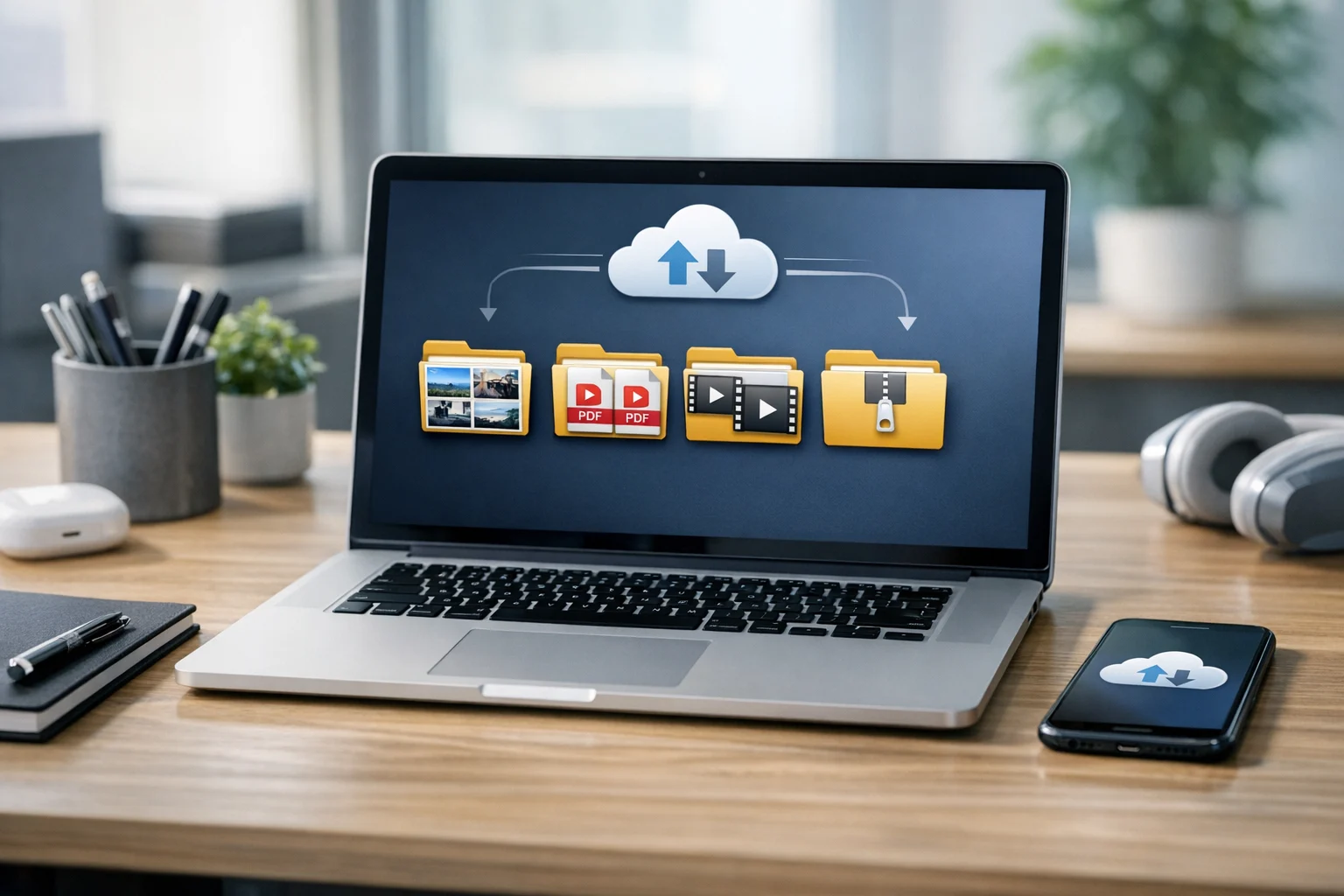
If your Downloads folder feels like a time capsule, you're not alone. Most people save files quickly and sort them later, which usually means never. Screenshots pile up, PDFs get duplicated, videos eat storage space, and random files sit untouched for months. The result is clutter, wasted storage, slower searches, and a constant feeling that something important is buried somewhere on your device.
A good cleanup doesn't mean deleting everything. It means deciding what still matters, choosing better formats, shrinking oversized files, and moving important items into a storage system you can actually maintain. For students, creators, small businesses, marketers, developers, office teams, freelancers, and everyday users, this process can save time every week.
Here is a practical way to clean up old downloads, screenshots, PDFs, and videos without turning it into an all day project.
Start with a quick file audit
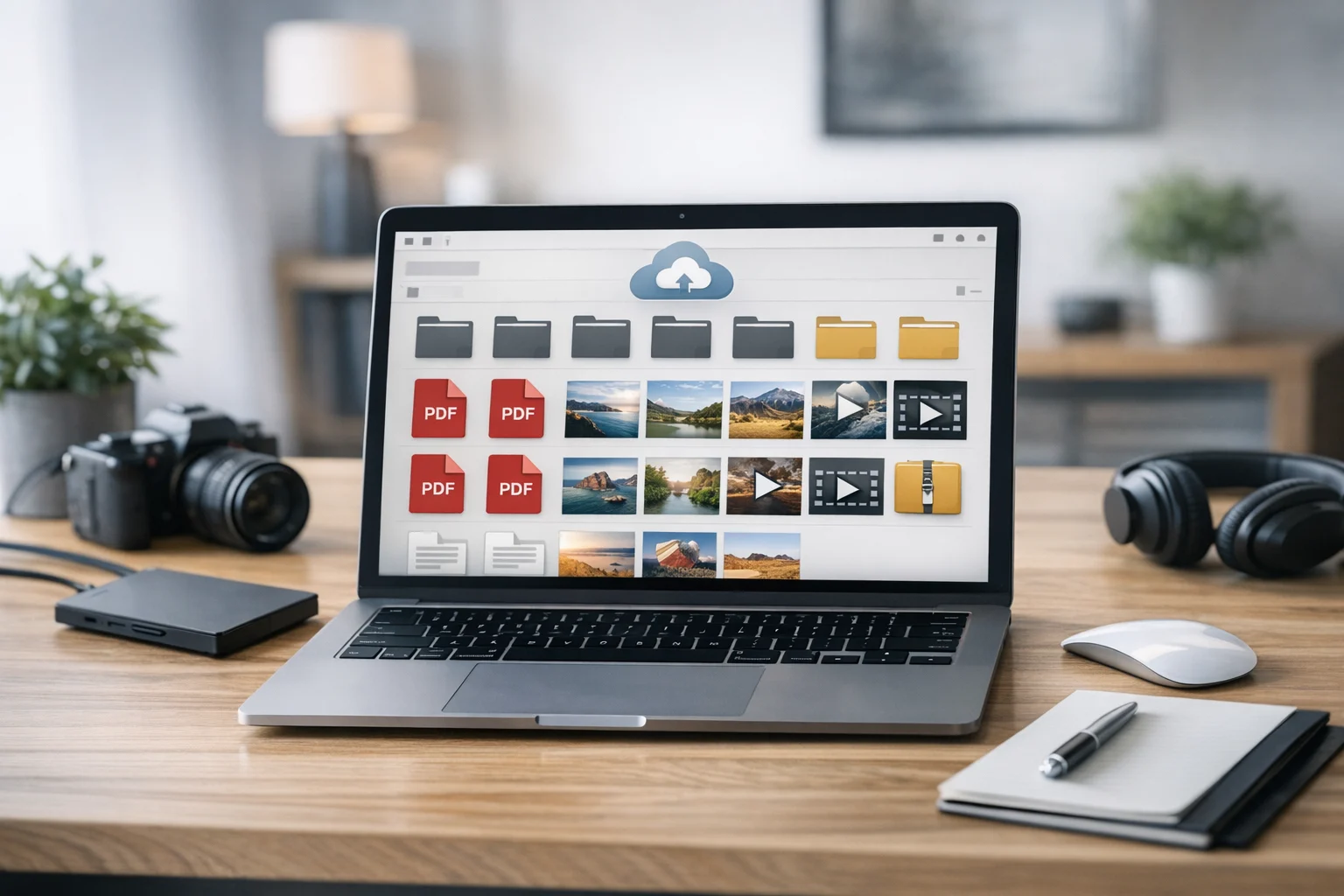
Before you delete or convert anything, take 10 to 15 minutes to see what you actually have. Open your main folders such as Downloads, Desktop, Screenshots, Documents, and Videos. Sort by file type, size, or date modified. This immediately shows where the biggest problems are.
In most cases, clutter falls into a few categories:
- Duplicate downloads, especially invoices, forms, attachments, and installer files
- Screenshots saved in multiple formats and copied across devices
- PDFs with unclear names like scan001, final, final2, or edited-final
- Large video files exported more than once
- Old compressed folders such as a ZIP archive or RAR archive that were never unpacked or renamed
- Temporary assets from projects that are already done
The goal is to separate active files from inactive files. Create three temporary folders called Keep, Archive, and Delete. Move files into one of those groups as you review them. This small step prevents you from hesitating over every single item.
Clean up old downloads first
The Downloads folder usually contains the easiest wins. Many files here are short term by nature, such as installers, attachments, copies of web images, and exported documents. If a file has already been moved into a project folder, backed up elsewhere, or uploaded to cloud storage, the download copy may not need to stay where it is.
Look for these common items:
- Multiple versions of the same PDF or image
- Software installers you no longer need
- Forms and contracts that have already been signed and filed
- Random media files from messaging apps and browsers
- Compressed archives that were only needed once
For anything you need to keep, rename it clearly before moving it. A name like 2024-tax-receipt-april.pdf is far more useful than document(7).pdf. Good naming reduces future clutter and helps prevent duplicate storage.
If your downloads include lots of images in mixed formats, it's a good time to standardize them with image converter tools. An image converter helps you convert image files into formats that are easier to preview, share, or store. This matters when you have folders full of screenshots, downloaded graphics, and exported assets from different apps.
Sort screenshots by purpose, not just date
Screenshots become messy because they are usually captured for quick reference. Then they stay forever. Some are useful records. Others are duplicates, blurry notes, or temporary reminders that have already served their purpose.
A simple way to clean them is to sort screenshots into these groups:
- Reference, such as receipts, settings, or support instructions
- Work assets, such as design feedback, reports, or campaign proofs
- Personal keepsakes
- Disposable screenshots that can be deleted
Once sorted, think about format. The best image format depends on how you plan to use the file. If the screenshot is mostly text, charts, or interface elements, PNG often looks sharper. That is why JPG vs PNG is still a useful comparison. JPG creates smaller files, but it may blur fine text. PNG keeps crisp detail, but the size is usually larger.
Another useful comparison is WebP vs PNG. WebP often gives you smaller file sizes while preserving good quality, which can be a smart choice for storage and web use. If you're trying to clean up large folders of screenshots, converting PNG screenshots to WebP can reduce storage usage without making the images hard to read.
Online file conversion makes this easier. Instead of opening each file in an editing app, you can use a file converter to process the formats you actually want to keep. Standardizing screenshots into one or two formats makes searching, sharing, and backing up much easier.
Turn scattered screenshots into fewer, better files
Many screenshot folders contain sequences of images that belong together, such as tutorial steps, meeting notes, receipts, or proof of work. Keeping them as dozens of separate image files creates clutter. In those cases, combine them into a single document.
If you have a batch of screenshots that should stay together, use an image to PDF tool to turn them into one organized file. This is useful for expense records, research materials, design approval chains, or assignment references. It also improves document storage because one clean PDF is easier to name and file than twenty screenshots with auto generated names.
Sometimes you need to go in the opposite direction. If a PDF contains visual pages you want to extract or reuse, converting PDF to JPG can be helpful. A PDF to image converter makes it easier to pull out presentation slides, scanned pages, or page previews for other workflows.
Clean up PDFs by reducing versions and file size
PDF clutter is usually caused by versioning problems. People download one copy, edit another, scan another, then save several slightly different versions. PDFs also become heavy fast when they contain images, scanned pages, or exported layouts.
Start by grouping PDFs that belong together:
- Forms and applications
- Invoices and receipts
- Contracts and signed files
- Reports, slide exports, and proposals
- Scans and reference documents
Then remove obvious duplicates and decide which version is the master file. If a document is finished, label it clearly and archive the rest. If several PDFs belong to one project, merge or reorder them before storing.
Compression is often the biggest win here. A large scanned PDF may be difficult to email, slow to upload, and expensive to keep in cloud storage over time. Using a PDF compressor can shrink file size while keeping the document readable. That matters for teams dealing with lots of proposals, handbooks, scans, and client paperwork.
If you need to convert PDF files into more usable formats, think about why you're keeping them. For visual reuse, PDF to JPG works well. For collecting visual material into one file, image to PDF is a cleaner choice. A PDF converter is not just for compatibility. It also helps you reduce duplicates because you can keep the most useful version instead of every format ever created.
If your work regularly involves forms, presentations, and scans, it's worth browsing the broader PDF Tools collection so you can merge, split, reorder, or compress files as part of your cleanup process.
Handle videos before they take over your storage
Videos are often the largest files on any device. Old screen recordings, exported edits, webinar downloads, camera clips, and social media drafts can quietly consume huge amounts of space. The trick is to separate source footage from final deliverables.
Ask these questions for every video folder:
- Is this original footage I may need again?
- Is this an export that can be recreated later?
- Do I need the highest quality version, or just a shareable copy?
- Is the format still the best one for playback and storage?
If the answer is no to long term value, delete it. If the answer is maybe, archive it. If the answer is yes, optimize it.
Format choice matters here. MP4 vs MOV is one of the most common decisions. MOV files are often larger and more editing friendly, while MP4 is usually the better format for sharing, compatibility, and efficient storage. If you have folders full of old exports, using a video converter to convert video files to MP4 can make playback easier across devices and reduce storage pressure.
For many users, the right approach is to keep one high quality master only when necessary, then store smaller MP4 copies for daily access. This works especially well for creators, marketers, office teams, and freelancers who need to share previews without hanging on to multiple bulky versions.
Use archives for inactive files, not active ones
Compressed folders are useful, but only when used at the right stage. Active project files should usually stay unpacked so you can search and edit them easily. Inactive projects, old deliverables, completed semesters, or finished client folders are better candidates for archiving.
A ZIP archive is the most practical choice for general use because it is widely supported. A RAR archive can be useful in some cases, but ZIP is typically easier to open on more systems without extra software. If your goal is long term organization, ZIP is usually the better default.
File compression helps reduce storage usage and simplify transfer, but it should support your workflow rather than hide files from you. Archive folders after naming them clearly, such as 2023-client-site-assets.zip or spring-semester-notes.zip.
If you need to manage old archives or repack inactive folders, the archive tools page is a good place to create or standardize compressed files for storage.
Archiving also works best when paired with a retention rule. For example:
- Keep active files accessible in normal folders
- Archive inactive files after 30 to 90 days
- Delete temporary exports and duplicate downloads after archiving
Move important files into a storage system that makes sense
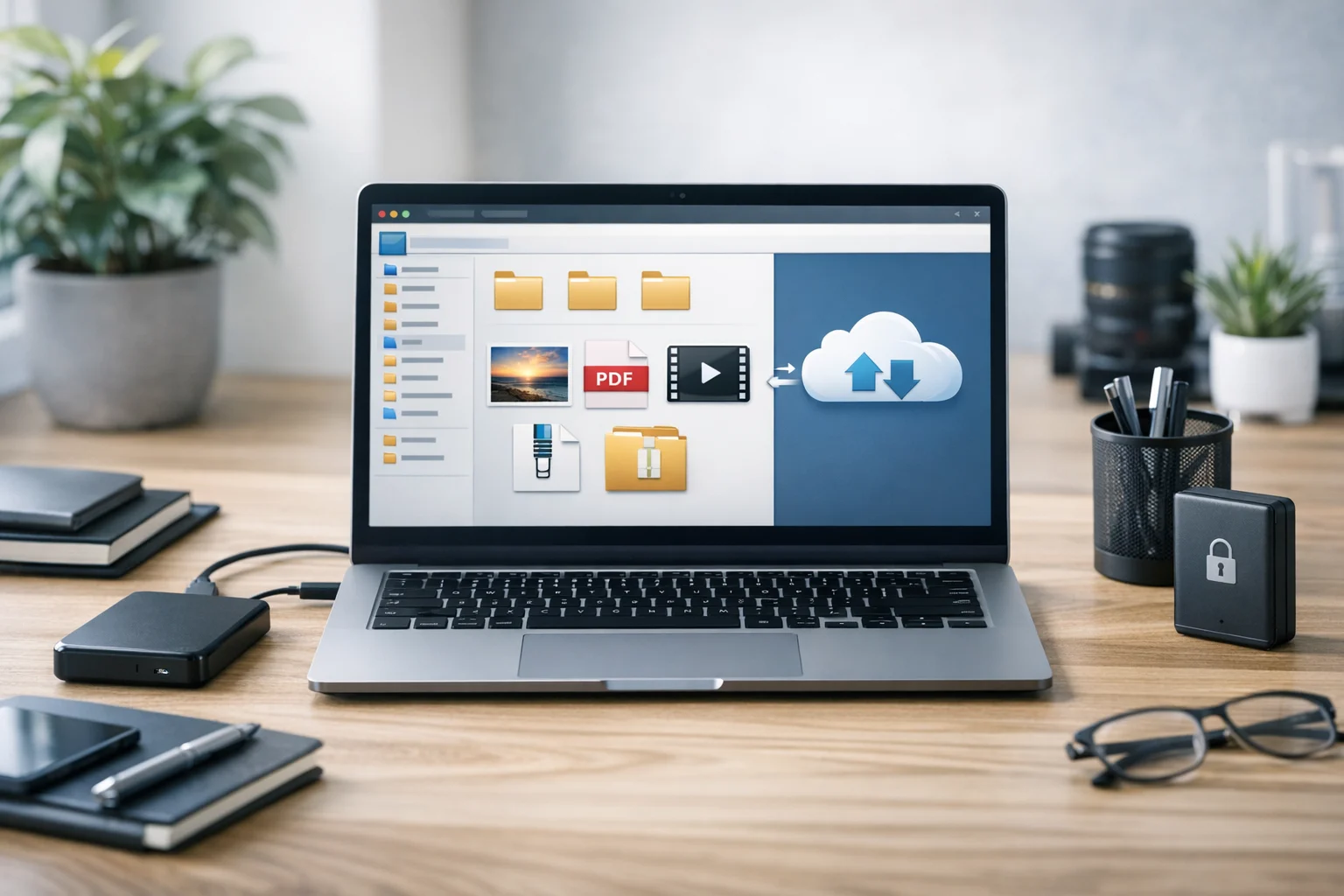
After cleanup, the next problem is making sure the mess doesn't come back. That means setting up storage tiers. You do not need every file on your desktop or local drive. Some files belong in active folders, some belong in archive folders, and some belong in cloud storage.
A practical storage setup often looks like this:
- Local active folders for files you are using this week
- Cloud storage for project access across devices and sharing
- Archive folders for completed work
- A separate file backup for important originals and records
When choosing cloud storage, look beyond price alone. Cheap cloud storage sounds great, but low cost plans are only helpful if they support your real needs. Think about version access, file sharing controls, and how easy it is to find your content later. If you store contracts, scans, client files, receipts, or internal documents, encrypted cloud storage and secure file storage should be part of the decision. Privacy matters even during routine cleanup.
For businesses and freelancers, document storage should reflect how files are actually used. Keep shareable copies in accessible folders, but move sensitive records to more restricted locations. A clear storage policy prevents your downloads folder from becoming the default filing cabinet again.
Watch for duplicate files after converting and compressing
Cleanup can accidentally create new clutter if you convert files without a naming system. You may end up with the original, the compressed copy, the renamed version, and the shared version all sitting together. That makes future cleanup harder.
Use simple naming rules like:
- project-name_v1.ext for works in progress
- project-name_final.ext for approved files
- project-name_web.ext for web ready versions
- project-name_archive.zip for inactive bundled files
It also helps to keep converted files in a separate output folder until you've reviewed them. Once you've confirmed the new version works, move it into the correct permanent location and delete extras. If duplicate files are a recurring problem in your workflow, this guide on how to avoid duplicate files can help you build a cleaner process.
Know when to convert and when to compress
People often mix up conversion and compression, but they solve different problems. Conversion changes the file format. Compression reduces file size. Sometimes you need one. Sometimes you need both.
Use conversion when:
- You need better compatibility
- You want a more efficient format
- You need to extract content, such as PDF to JPG
- You want to combine images into a PDF
Use file compression when:
- The file is too large to upload or share easily
- You want to reduce storage usage
- You are preparing inactive files for archive storage
For example, a PNG screenshot might be converted to WebP to save space while keeping good quality. A scanned PDF might be compressed to make document storage more practical. A MOV export might be converted to MP4 for easier playback and smaller file size. Choosing the right step makes cleanup more effective.
Build a simple monthly cleanup routine
You do not need to do a major file cleanup every week. A short monthly routine is usually enough to keep things under control. The key is consistency.
Try this 20 minute routine once a month:
- Empty unnecessary downloads
- Sort screenshots and delete disposable ones
- Compress or archive completed PDFs
- Review large video files and convert video files that only need shareable copies
- Move completed work to cloud storage or archive folders
- Run a file backup for anything important
This kind of habit prevents slow storage creep and keeps your files usable. It also makes search faster, sharing easier, and backup more reliable.
Make your cleanup system easy to repeat
The best cleanup system is one you can repeat without thinking too hard. Keep your folder structure simple. Use consistent names. Standardize common formats. Archive inactive files. Back up important originals. Store sensitive material in secure file storage with the right access controls.
When you need a file converter, PDF converter, image converter, or video converter, use those tools with a clear purpose. Convert image files when a better format improves storage or sharing. Convert PDF files when you need extraction, readability, or easier organization. Compress files when size is the real problem. Archive finished folders when they no longer need daily access.
Frequently Asked Questions
Start with duplicate downloads, old installers, temporary attachments, and files that already exist in a project folder or backup. These are usually the safest and fastest files to remove.
Use PNG when text clarity matters, JPG when you want smaller files and quality is less critical, and WebP when you want a strong balance of quality and file size for storage or web use.
Convert a PDF when you need a different format, such as PDF to JPG, or when you want to combine images into a PDF. Compress a PDF when the file is too large but the format is still correct.
MP4 is usually the best choice for general storage and sharing because it has broad compatibility and smaller file sizes than many MOV exports. Keep larger originals only if you may need to edit them again.
Use a ZIP archive for completed projects, old reference folders, or collections of files you do not need to edit often. Avoid archiving active work that still needs frequent access.
Use encrypted cloud storage or another secure file storage option, keep access limited, organize files by sensitivity, and maintain a separate file backup for important records.